Beaufort d'été AOP - (Raw Aged French Cow's Milk Alpine Cheese)

(No reviews yet)
$20.48 - $40.95
Running Low - we will fill orders as they arrive, but we may run out!
Adding to cart… The item has been added

This item requires expedited shipping This item requires expedited shipping

This massive Alpine cheese (90 pound wheels) is a crown jewel in the world of Savoie. Each wheel requires about 130 gallons of milk to make, and the final form is about 30 inches in diameter, and 6 to 7 inches tall. The edge of the cheese has a concave shape which is the result of the form's band, which is tightened around the cheese when it begins its lengthy aging process.

Beaufort is produced in the valleys of Beaufortain, Val d'Arly, Tarentaise and Maurienne using raw milk from the Mahogany-colored Tarine or Tarentaise breed of cow. Beaufort is made throughout the year, but to our taste, the best wheels are made using summer milk. The specific Beaufort, only made with summer's milk, is Beaufort d'été. It is only made from June to October when the cows are grazing on fresh mountain grass and flowers, a process called transhumance. 

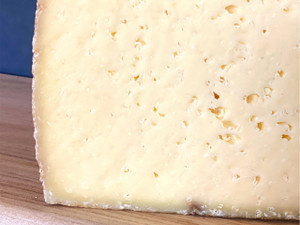
The summer's milk gives Beaufort d'été a rich yellow-hued paste and rich flavor with notes of wildflowers and herbs.

Country of Origin
France
Region
Savoie
Type of Milk
Cow
Milk Treatment
Raw
Rennet
Animal
Cheese Style
Alpine

Fromagerie Joseph Paccard

How much cheese should I buy?

We advise buying small quantities more frequently to avoid long term storage because the complex flavors and aromas of good cheese will change and degrade over time. For appetizer quantities and not much left over, we suggest 1/4 lb per person. For larger servings or if you'd like some left overs, we suggest a full 1/2 lb per person.

How should I serve my cheese?

You can serve any number of cheeses: a single magnificent chèvre or a large selection celebrating the diversity of aromas, flavors and textures found in various traditions around the world. Choose what you like and what you expect your audience will enjoy. We usually go for a selection of three to four cheeses with various milk types, textures and flavors.

Take your cheese out of the refrigerator an hour or so before serving. Just before serving, unwrap each cheese and scrape the cut surface with a knife edge to remove a thin layer. If you notice dried out parts or mold on the face of the cheese, cut it away.

Can I eat the rind?

Most cheeses have rinds and most rinds are edible. If you don’t like the taste or texture, cut it off.

What do I do about the mold on my cheese?

Cheese stored for some time may grow exterior molds. Typical molds will be white or blue-green but you can sometimes come across yellow or gray. Most of the time, you can refresh the cheese by cutting away those affected areas. The cheese underneath will be fine.

How do I store my cheese?

Store in a higher humidity area of your refrigerator - likely an enclosed spot which allows for limited airflow rather than constant drafts.

How do I wrap my cheese?

Use a clean wrap of the cheese paper, or, in a pinch use parchment (for softer cheeses) or aluminum foil (for firm to hard cheeses).

Enjoy!

No reviews yet.

Click the button below and be the first to review Beaufort d'été AOP - (Raw Aged French Cow's Milk Alpine Cheese)
Description

This massive Alpine cheese (90 pound wheels) is a crown jewel in the world of Savoie. Each wheel requires about 130 gallons of milk to make, and the final form is about 30 inches in diameter, and 6 to 7 inches tall. The edge of the cheese has a concave shape which is the result of the form's band, which is tightened around the cheese when it begins its lengthy aging process.

Beaufort is produced in the valleys of Beaufortain, Val d'Arly, Tarentaise and Maurienne using raw milk from the Mahogany-colored Tarine or Tarentaise breed of cow. Beaufort is made throughout the year, but to our taste, the best wheels are made using summer milk. The specific Beaufort, only made with summer's milk, is Beaufort d'été. It is only made from June to October when the cows are grazing on fresh mountain grass and flowers, a process called transhumance. 

The summer's milk gives Beaufort d'été a rich yellow-hued paste and rich flavor with notes of wildflowers and herbs.

More Information

Country of Origin
France
Region
Savoie
Type of Milk
Cow
Milk Treatment
Raw
Rennet
Animal
Cheese Style
Alpine

Fromagerie Joseph Paccard

Caring for Your Cheese

How much cheese should I buy?

We advise buying small quantities more frequently to avoid long term storage because the complex flavors and aromas of good cheese will change and degrade over time. For appetizer quantities and not much left over, we suggest 1/4 lb per person. For larger servings or if you'd like some left overs, we suggest a full 1/2 lb per person.

How should I serve my cheese?

You can serve any number of cheeses: a single magnificent chèvre or a large selection celebrating the diversity of aromas, flavors and textures found in various traditions around the world. Choose what you like and what you expect your audience will enjoy. We usually go for a selection of three to four cheeses with various milk types, textures and flavors.

Take your cheese out of the refrigerator an hour or so before serving. Just before serving, unwrap each cheese and scrape the cut surface with a knife edge to remove a thin layer. If you notice dried out parts or mold on the face of the cheese, cut it away.

Can I eat the rind?

Most cheeses have rinds and most rinds are edible. If you don’t like the taste or texture, cut it off.

What do I do about the mold on my cheese?

Cheese stored for some time may grow exterior molds. Typical molds will be white or blue-green but you can sometimes come across yellow or gray. Most of the time, you can refresh the cheese by cutting away those affected areas. The cheese underneath will be fine.

How do I store my cheese?

Store in a higher humidity area of your refrigerator - likely an enclosed spot which allows for limited airflow rather than constant drafts.

How do I wrap my cheese?

Use a clean wrap of the cheese paper, or, in a pinch use parchment (for softer cheeses) or aluminum foil (for firm to hard cheeses).

Enjoy!

No reviews yet.

Click the button below and be the first to review Beaufort d'été AOP - (Raw Aged French Cow's Milk Alpine Cheese)